 +92 330 4739908
 +92 330 4739908


It Usually Comes Up at the Most Ordinary Moment
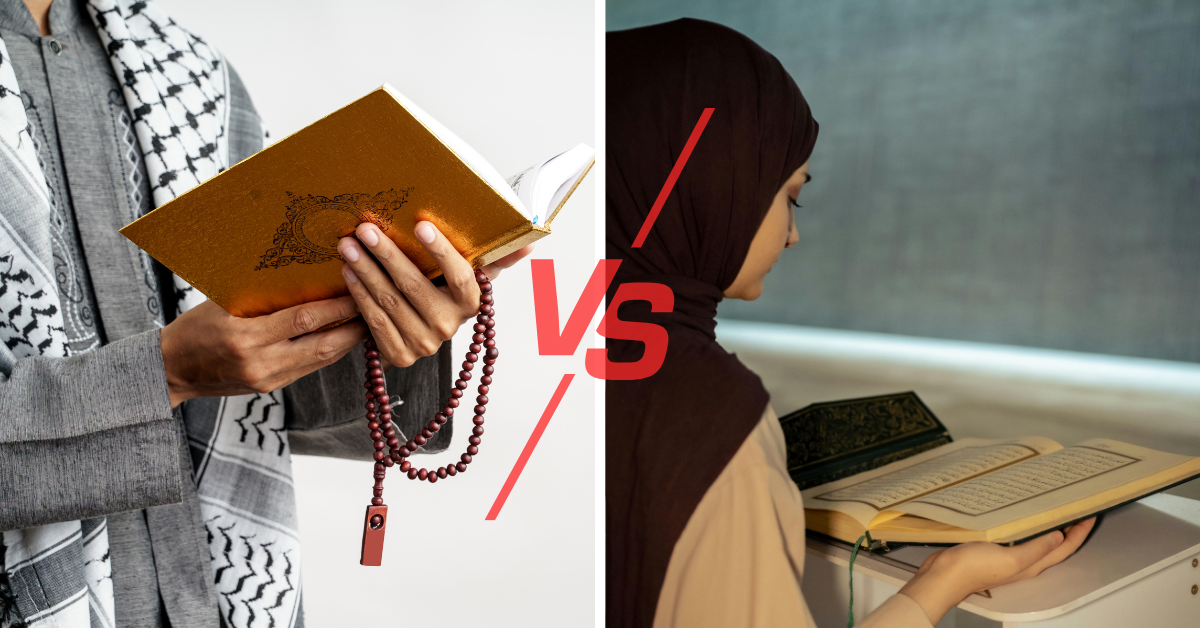
You’re registering your child for online Quran classes. Maybe you found an academy through a Google search, maybe someone in your community recommended it, or maybe you’ve been thinking about it for a while and finally decided to take the step. You fill in your child’s name, their age, perhaps a note about where they are in their learning. And then the form asks a simple question, or the coordinator asks it during a call: “When it comes to male vs female Quran teachers and whether a female Quran teacher online is the right fit which would you prefer for your child?”
Why This Question Feels More Important Than It Looks
And you pause. Not because you don’t care. Precisely because you do. You want to make the right choice. But it isn’t immediately obvious what the right choice is. Maybe your child is young and you feel a female teacher would be gentler, more patient with a beginner. Maybe you have a teenage son and something tells you he should be learning from a male teacher, though you haven’t quite put that feeling into words yet. Maybe you have a daughter approaching adolescence and the question feels more significant now than it would have a few years ago. Or maybe you simply don’t know, and you’d like someone to give you an honest answer rather than a policy statement about which online Quran teacher is right for your kids.
More Than a Preference, Less Than a Rule
The truth is, this question deserves a real conversation. Because what sounds like a simple administrative preference male or female Quran teacher actually touches something much deeper. It touches how your child feels in that classroom. How comfortable they are asking questions. Whether they connect with the teacher or tolerate the class. Whether a teenage boy will one day feel at ease raising a question about his faith, or whether he’ll sit quietly and keep his doubts to himself. Whether a young girl learning to recite will open her voice fully or hold back without quite knowing why. These are not small things. These are the conditions in which Quran learning either takes root or doesn’t.
So let’s talk about this honestly. Not with a policy, not with a blanket recommendation, and not by pretending the question has a single correct answer that applies to every child in every household. But with the kind of genuine, experience-based conversation that this question has always deserved.
A Stereotype That Needs to Be Addressed First
Before we talk about age, gender dynamics, comfort levels, or Islamic considerations, there is one assumption worth clearing up. If it sits quietly in the back of a parent’s mind, it can distort every other decision they make. The assumption is that when choosing a Quran teacher for children, female teachers are better for younger children and basic recitation. but when it comes to the more serious, technical aspects of Quran education Tajweed rules, Makharij, Waqf and Ibtida, Tafsir, Arabic grammar a male teacher is somehow the more qualified online Quran tutor for kids. This is not true. And it is important to say that clearly.
1. A Tradition That Goes Back to the Earliest Generations of This Ummah
The tradition of female Islamic scholarship is not a modern development. It is not a concession to contemporary sensibilities. Women have been scholars, teachers, and transmitters of Islamic knowledge since the earliest generations of this Ummah. The Sahabiyyat taught. Aisha (RA) was one of the most significant sources of hadith and Islamic guidance in all of early Islamic history. Female scholars have never been excluded from the deep sciences of this religion not from Hadith, not from Fiqh, and certainly not from the Quran. So when a parent today chooses a female Quran teacher online, they are drawing from a tradition that is over fourteen centuries old.
2. The Highest Credential in Quran Teaching Has No Gender
In the world we live in today, every online female Quran teacher and her male counterpart alike are completing Dars-e-Nizami. They are earning Ijazah with Sanad a chain of transmission that travels teacher to teacher, generation to generation, all the way back to the Prophet ﷺ. That is the highest possible credential in Quranic transmission. It is not a gender-specific honor. It never was. A female teacher who holds Ijazah in Tajweed is not a female teacher who is good enough. She is simply a qualified Quran teacher online for children. The same standard, the same chain, the same knowledge.
3. Where Gender Genuinely Matters in a Child’s Quran Education
So if a parent is hesitating to place their child with a female teacher because they quietly believe she may not be equipped to teach Tajweed properly, or to go deep into the technicalities of recitation that hesitation is worth examining. Because it is not rooted in reality. It is rooted in a cultural assumption that Islamic scholarship itself does not support. With that cleared, we can have the more honest conversation about what gender actually does and does not influence in a child’s Quran education.
When Your Child Is Little, Warmth Comes Before Everything Else
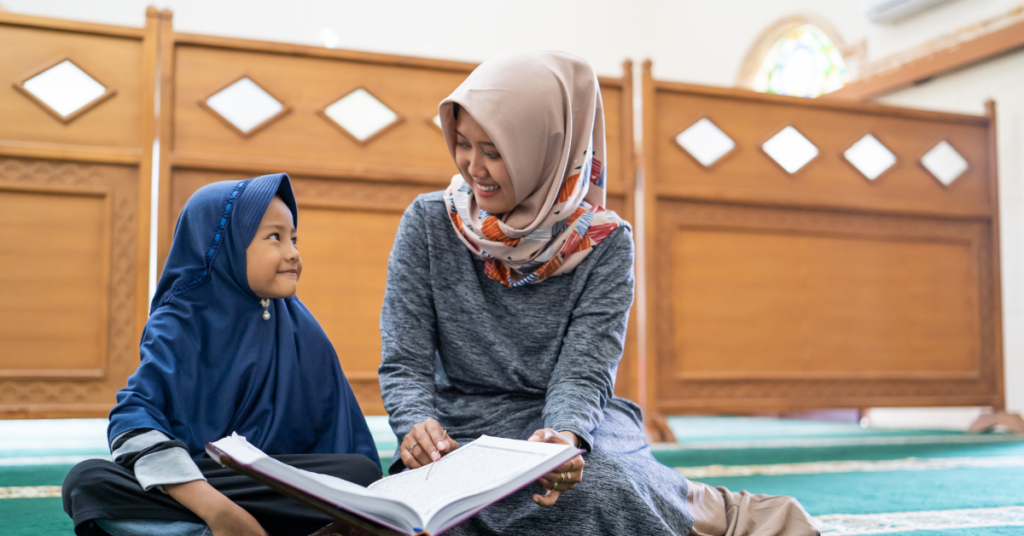
There is a reason that almost every kindergarten classroom in the world, regardless of country, culture, or religion, is predominantly taught by women. It is not a coincidence. It is not a policy. It is an observation that has repeated itself across generations and across every corner of the world that young children, in their earliest years of learning with an online Quran teacher for children, respond naturally to the kind of presence that a mature, warm female teacher tends to bring into a classroom. This is not a rule. But it is a pattern that parents and educators have observed consistently enough that it deserves an honest mention.
1. A Five-Year-Old Does Not Arrive as a Student. They Arrive as a Child.
A child starting Qaida at the age of five or six is not arriving at that screen as a student in the academic sense. They are arriving as a small human being who is still learning how to sit still, how to focus, how to trust a stranger on a screen, and how to feel safe enough in that unfamiliar space to actually try. They will mispronounce letters. They will get distracted. They will have days where they simply do not want to be there. And what determines whether that child comes back to the next class with any willingness at all is not the qualification of the female Quran teacher for kids in that moment it is how that teacher made them feel.
2. For a Young Child, Feeling Safe and Learning Are the Same Thing
Young children do not separate learning from emotion. For them, the two are the same thing. A lesson that felt safe and warm is a lesson they remember. A lesson that felt cold, rushed, or intimidating is one their mind quietly shuts down.
3. Why Most Early Childhood Teachers, Across the World, Are Women
This is where the patience, emotional attunement, and calm that experienced female teachers naturally bring into early childhood learning becomes genuinely relevant. Not because male teachers cannot be warm and patient; many are exceptional with young children. But the observable pattern, across general education research and the lived experience of Quran teachers for kids, is consistent: very young children tend to settle more quickly and build their early relationship with the Quran more comfortably with a maternal, experienced female Quran tutor online.
When the Child Is a Teenage Boy, the Conversation Changes Completely
There is a particular kind of silence that parents of teenage boys will recognize. It is the silence that falls when a son has a question he does not know how to ask. A question about faith, about doubt, about what Islam actually says about something he encountered at school or online. About why we pray, about what happens after death, about whether what he is feeling makes him a bad Muslim. These are not small questions. They are the questions that shape a young man’s relationship with his religion for the rest of his life.
1. The Male Figure a Teenage Boy Is Quietly Looking For
A teenage boy moving through adolescence is navigating something difficult to fully articulate from the outside. He is building an identity. He is figuring out what kind of man he wants to become. He is watching the adult men around him and consciously or not measuring himself against what he sees. Developmental psychology is consistent on this point: adolescent boys benefit deeply from the presence of male figures who model what a capable, grounded, principled adult man looks like. Not a father, not a friend but something specific to the learning relationship. A man who knows the Quran, who takes the religion seriously, and who is willing to sit with a teenager’s questions without dismissing them.
2. What It Means to Grow Up Muslim Between Two Worlds
For Muslim families living in the United States, this carries particular weight. A male Quran tutor for children may be one of the very few practising Muslim men with genuine religious knowledge who appears in that boy’s week consistently, with patience, and without judgment. That is not a small thing in the life of a teenage boy growing up between two worlds, trying to hold his faith with both hands while everything around him pulls in different directions.
3. The Questions He Asks at the Edge of a Tajweed Lesson Matter Most
A teenage boy who feels genuinely at ease with his male Quran teacher will ask. He will ask about Fiqh, about rulings he has heard conflicting things about, about the doubts that come naturally with growing up Muslim in a non-Muslim country. Not because the class is designed for that, but because the comfort is there, and comfort creates openings. Those conversations, even when they happen briefly at the edge of a Tajweed lesson, can quietly become some of the most significant religious education that boy ever receives.
4. The Teacher He Opens Up to Is the Teacher Who Reaches Him
This ease, this natural openness a teenage boy tends to feel with a knowledgeable, experienced male teacher, is a pattern too consistent to ignore. It is not that a female teacher cannot guide a teenage boy with wisdom and depth. Many do, and do so remarkably well. But when a parent is weighing the decision specifically for a son in his mid-teens and beyond, the question worth asking is not just: who is the better teacher? It is: with whom will my son actually open up? Because a Quran education that stays on the surface of recitation, while the deeper questions go unasked, is only doing part of its job.
What About Teenage Girls?
If the conversation around teenage boys points toward male teachers, the conversation around teenage girls points in the opposite direction and for reasons that go beyond religious protocol. A girl approaching or moving through adolescence is developing a relationship with her own voice. Literally. Quran recitation has an aesthetic dimension that is deeply personal the way a student opens their voice, extends a vowel, allows a verse to breathe. That kind of recitation requires a certain unselfconsciousness. It requires feeling unguarded enough to actually try.
1. Why a Female Quran Teacher Online Creates a Different Space for Teenage Girls
Many teenage girls, even those who are confident in other areas of their lives, instinctively hold back their recitation in front of a male teacher. Not because they have been told to. Not always because of a specific religious concern. But because adolescence brings a heightened awareness of being seen and heard by the opposite gender, and that awareness, however subtle, quietly enters the classroom and sits between the student and the lesson.
2. Honesty in the Classroom Is Where Real Progress Begins
With a female Quran teacher for children, that guardedness tends to dissolve. A teenage girl is more likely to recite fully, to attempt the correct Makhraj without embarrassment, to ask about a rule she has been unsure of, to admit she has forgotten something she feels she should know by now. The learning environment becomes honest. And an honest learning environment is where real progress actually happens.
The Islamic Dimension: Not a Restriction, a Consideration
Most parents thinking about this question have an Islamic dimension somewhere in their mind. They may not raise it directly. But it is there. And it deserves to be addressed honestly, not as a fatwa, not as a ruling to be handed down, but as a genuine consideration that thoughtful Muslim parents in the USA face when selecting a male or female Quran tutor for children. The Islamic guidance on this is more nuanced than it is often presented.
1. For Young Children, Qualification Comes First. Gender Comes Second
For young children, boys and girls alike, there is no significant Islamic concern around the gender of a Quran teacher. A young child learning their letters, building their foundation in Qaida, and developing their first relationship with recitation the priority at this stage is a qualified, patient, attentive female Quran tutor for kids or male equivalent. Gender is a secondary consideration.
2. As Children Grow, Islamic Values of Modesty Naturally Enter the Conversation
As children approach and move through adolescence, the picture changes not because Islam restricts learning across genders, but because Islamic values around modesty, comfort, and appropriate interaction naturally begin to carry more weight. A teenage girl learning one-to-one with a male teacher, a teenage boy in close learning relationship with a female teacher these are not haram arrangements. But many families feel, and many scholars would affirm, that same-gender instruction at this stage creates an environment more naturally aligned with Islamic values of modesty and ease.
3. The Gender Consideration Is About Environment, Not Qualification
What is important to say clearly is this: Islamic history does not support the idea that female scholars are less qualified or that women cannot teach men. The Sahabiyyat taught. Female scholars have held authority in Islamic sciences across every century of this religion’s history. The consideration around gender in teaching is not about qualification. It is about the learning environment about creating the conditions in which a student feels most comfortable, most open, and most able to learn without any undercurrent of awkwardness or self-consciousness.
4. The Right Frame for This Decision
That distinction matters. A young child learning their letters, building their foundation in Qaida, and developing their first relationship with recitation: the priority at this stage is a qualified, patient, attentive female Quran tutor for kids or male equivalent. They are simply choosing the environment in which their daughter will learn best. And that is always the right frame for this decision.
The One Thing That Outranks Gender Every Single Time
Everything discussed so far about choosing a male or female Quran teacher age, adolescence, Islamic considerations, comfort, openness all of it is real and worth weighing. But there is something that sits above all of it. Something that no gender preference, however well-reasoned, can substitute for.
1. A Qualified, Invested Teacher Beats the Wrong Gender Match Every Time
A highly qualified, attentive, experienced female Tajweed teacher online will produce better results with a teenage boy than a mediocre, disengaged male teacher every single time. A warm, patient, skilled male teacher will reach a young girl more effectively than an indifferent female teacher who moves through pages. Gender creates conditions. It does not guarantee outcomes.
2. Before You Ask Male or Female, Ask This
This is the point that gets lost when parents focus too heavily on the male-female question. They are asking the right question but sometimes at the expense of the more important one. The more important question is: who is this teacher?
3. The Qualities That Actually Move a Child Forward
Not their gender. Their attentiveness. Their ability to listen to a child’s recitation and identify what is actually going wrong. Their patience when a child struggles with the same letter for the third week in a row. Their skill in keeping a distracted child present without making the class feel like a confrontation. Their consistency being there, on time, prepared, every single session these are the marks of a genuinely committed online Quran instructor for kids. These qualities determine whether a child’s Quran education moves forward. Gender is a lens that helps narrow the decision. Quality is what the decision ultimately rests on.
4. Gender Narrows the Choice. Quality Makes It
So when a parent is evaluating an academy or a teacher, the gender question is worth asking but it should never be the only question, and it should never come before the quality question. A well-matched teacher of either gender, who is genuinely qualified and genuinely invested in the child in front of them, is always the right choice.
Finding the Right Online Quran Teacher for Your Kids
All of the guidance in this article the age considerations, the adolescent dynamics, the Islamic framework, the quality question is designed to help a parent make a more informed starting decision. But the truth is that no article, however thorough, can tell you which specific teacher is right for your specific child. Only your child can tell you that. And they will not always in words.
1. A Few Classes Reveal What No Profile Ever Could
This is why a trial period is not just a commercial convenience that academies offer. It is genuinely the most reliable tool a parent has when selecting a private Quran teacher for kids. A few classes with a teacher reveal more than any profile, any credential list, or any recommendation ever could. Because what you are looking for cannot be measured on paper. You are looking for a connection.
2. Do Not Just Ask Your Child How the Class Was. Watch Them Instead
But most parents make one mistake during a trial period. They ask their child afterward: “How was the class?” And the child says “Fine” or “Good” and the parent takes that as confirmation. Watch instead. Does your child walk to that screen willingly, or do they drag their feet? Do they talk about the teacher afterward even casually, even once? Do they seem relaxed during the class or visibly stiff? After a few weeks, are they self-correcting their recitation outside of class humming a verse, fixing their own pronunciation which is one of the clearest signs that a teacher’s feedback has genuinely landed? Or are they completing classes without carrying anything forward?
3. The Difference Between Surviving a Class and Actually Growing in One
A child who is truly connecting with their teacher shows it in small, unannounced ways. A child who is merely tolerating the class shows that too quietly, gradually, in the slow erosion of their willingness to sit down and begin. The trial is not about whether your child survives Quran lessons with an online teacher. It is about whether something is actually growing.
The Honest Answer Every Parent Deserves to Hear
There is no single correct answer to the male vs female Quran tutors debate. And any academy or article that gives you one without knowing your child, their age, their temperament, and their stage of learning is giving you a policy, not guidance. What this article has tried to offer instead is a framework. Because the question is not really male or female. The question is: what does my child need right now, at this age, at this stage, in this household?
What the Right Choice Actually Looks Like Across Different Ages
For most young children starting out, a warm, qualified female teacher is often a natural and comfortable beginning. For teenage girls, a female teacher generally creates the environment in which recitation opens up and learning becomes honest. For teenage boys moving into adolescence and beyond, a knowledgeable male teacher often becomes not just a Quran instructor but one of the most quietly significant Muslim male presences in that boy’s weekly life. And for every child at every stage, the teacher’s qualification, attentiveness, and genuine investment in the student in front of them matters more than any demographic category. These are not rules. They are patterns observed honestly, offered genuinely, and always subject to the individual child sitting in front of the screen.
This Decision Belongs to Your Family. We Are Here to Help You Make It.
At Beacon Quran Tuitions, we work with both qualified male teachers and every online female Quran tutor in USA precisely because we believe this decision belongs to the family. Our role is to understand your child’s age, stage, and needs, and to match them with a qualified Quran teacher for kids most likely to reach them, and then to give you the trial period to find out whether we got it right. Because the goal was never to fill a slot in a schedule. The goal was always the same thing it has been since the first lesson of the first child we ever taught: that your child builds a real, lasting relationship with the Quran. One that stays with them long after the classes end.